
- August 16, 2026
- Edidiong Akpanuwa & Co
- 0
Nigeria may be entering a new phase in its digital infrastructure development.
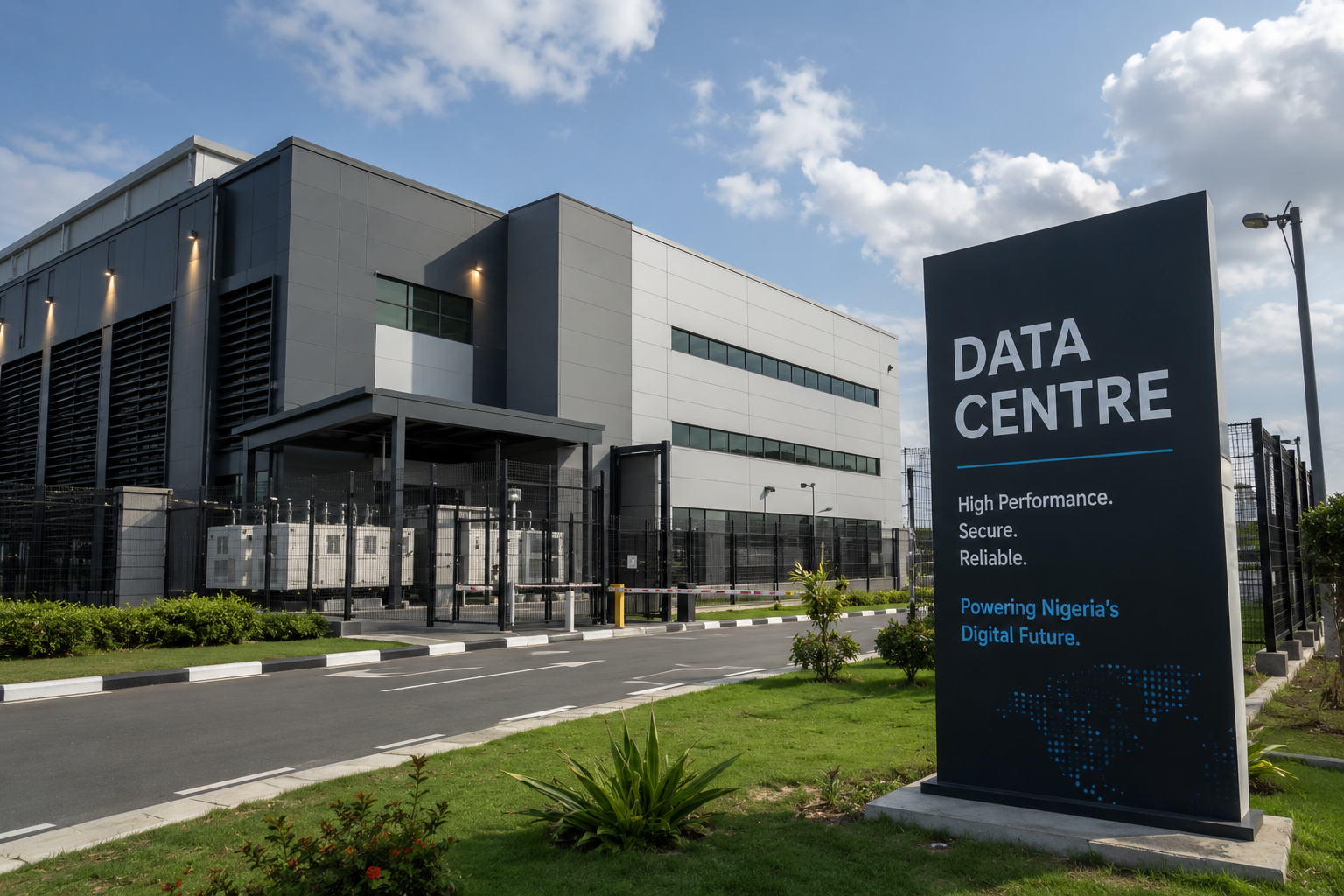
The reported emergence of Kasi Cloud’s AI-ready hyperscale data centre in Lagos, with plans for up to 100MW of capacity, is more than another milestone in Nigeria’s technology sector. It signals the emergence of a new infrastructure category with significant legal, regulatory and investment implications.
As artificial intelligence becomes increasingly important to financial services, healthcare, telecommunications, manufacturing, media and other sectors, the infrastructure required to power AI is becoming an investment asset in its own right.
For investors, technology companies, developers and businesses, the legal questions surrounding these projects will therefore extend far beyond conventional IT contracts.
AI Infrastructure Is More Than a Data Centre
Traditional data centres have largely been designed around data storage, enterprise hosting and cloud services.
AI infrastructure is different.
High-performance AI workloads require enormous computing capacity, specialised GPUs, high-density server racks, advanced cooling systems, reliable power and high-speed connectivity. The result is an infrastructure project that sits at the intersection of technology, real estate, energy and telecommunications.
That distinction has important legal consequences.
An investor considering an AI infrastructure project in Nigeria may need to examine land title, planning approvals, environmental obligations, electricity arrangements, telecommunications infrastructure, construction contracts, technology procurement, data protection, cybersecurity and financing arrangements as part of a single transaction.
The legal due diligence therefore needs to be substantially broader than that associated with a conventional technology investment.
1. Land and Title Due Diligence Will Remain Fundamental
AI infrastructure may be technologically sophisticated, but it still requires physical land.
A hyperscale campus occupying tens of hectares creates substantial property-law considerations.
Investors and lenders will need to establish, among other things:
- Who holds title to the land?
- Is the title properly perfected?
- Is the property affected by government acquisition?
- Are there competing claims or encumbrances?
- Are the necessary development and planning approvals in place?
- Are there adequate rights of access and rights of way?
- Are there restrictions affecting the proposed use of the property?
For large infrastructure projects, a defect in title can become a fundamental investment risk.
This makes comprehensive property due diligence an essential component of AI infrastructure transactions.
2. Power Supply May Be as Important as Computing Capacity
A 100MW AI campus is not simply a technology facility. It is also a major energy consumer.
AI computing requires substantial and reliable electricity. Consequently, the commercial viability of an AI data centre may depend heavily on the legal and contractual arrangements supporting its power supply.
Developers and investors may need to consider grid connections, embedded generation, renewable energy arrangements, power purchase agreements, backup generation, electricity regulation and the allocation of power-related risks.
This creates an important shift in legal practice.
Lawyers advising AI infrastructure projects will increasingly need to understand the interaction between technology infrastructure and energy infrastructure.
3. Data Sovereignty Is Becoming an Infrastructure Question
The location of computing infrastructure matters.
Where Nigerian businesses process data outside Nigeria, questions can arise concerning cross-border data transfers, privacy, cybersecurity, regulatory access and control over critical digital assets.
The growth of local AI computing capacity could therefore change how Nigerian companies think about cloud and AI services.
Data sovereignty is no longer simply about where information is stored. Increasingly, it is also about where the computing power processing that information is located and who controls the underlying infrastructure.
For businesses operating in regulated sectors, these considerations may become increasingly important when selecting cloud providers and AI infrastructure partners.
4. Government Participation Requires Careful Legal Analysis
Large strategic infrastructure projects often involve some form of government participation or support.
But there is an important distinction between government endorsement and a legally enforceable governmental commitment.
Investors should establish precisely what government involvement entails.
It could involve land arrangements, planning approvals, infrastructure support, tax incentives, regulatory facilitation, power arrangements or a formal public-private partnership.
Each structure presents different legal and commercial consequences.
Investors should therefore ensure that government-related commitments are properly documented and that the rights and obligations of each party are clearly defined.
5. AI Infrastructure Will Require Sophisticated Commercial Contracts
A hyperscale AI campus will depend on a network of contractual relationships.
These may include agreements between:
- developers and landowners;
- developers and construction contractors;
- data-centre operators and power providers;
- operators and telecommunications carriers;
- operators and cloud service providers;
- operators and AI companies;
- operators and hardware suppliers; and
- operators and end-users.
These contracts will need to address issues such as uptime, service levels, cybersecurity, data protection, intellectual property, equipment failure, business interruption, liability, insurance, force majeure and termination.
For customers relying on AI infrastructure, service-level commitments will be particularly important.
A few hours of downtime for a conventional website may be inconvenient. For a financial institution or AI company running mission-critical workloads, infrastructure failure can have substantially greater consequences.
6. Financing AI Infrastructure Will Create New Legal Opportunities
The capital requirements for hyperscale AI infrastructure are substantial.
Projects of this nature may attract infrastructure funds, private equity investors, development finance institutions, commercial lenders, strategic investors and technology companies.
This creates opportunities for sophisticated financing structures involving combinations of equity, debt, equipment financing, project finance and other forms of structured capital.
The underlying legal documentation will need to allocate risks relating to construction, power availability, technology performance, customer commitments, regulatory changes and project completion.
For investors, the quality of the legal structure can be as important as the technology itself.
7. AI Infrastructure May Drive M&A Activity
The emergence of AI-ready facilities could also change Nigeria’s technology M&A landscape.
Existing data centres, fibre networks, power infrastructure and other digital assets may become increasingly attractive acquisition targets as demand for computing capacity grows.
Instead of building every component from scratch, investors may acquire existing infrastructure and upgrade or integrate it into larger AI ecosystems.
This could create opportunities for:
- infrastructure acquisitions;
- data-centre mergers;
- strategic joint ventures;
- private equity investments;
- technology-infrastructure partnerships; and
- acquisitions of supporting power and connectivity assets.
Legal due diligence in such transactions will need to examine both the physical infrastructure and the underlying technology and commercial contracts.
8. Regulation Could Become a Competitive Factor
As AI infrastructure becomes strategically important, regulatory scrutiny is likely to increase.
Projects may need to navigate multiple regulatory areas, including data protection, cybersecurity, telecommunications, electricity, environmental regulation, planning and development control, taxation and foreign investment.
For investors, regulatory compliance should not be treated as a final-stage requirement.
It should form part of the investment decision from the beginning.
A project that has excellent technology but cannot secure the necessary approvals, reliable power arrangements or compliant data-processing structures may ultimately prove commercially unviable.
The Emerging Legal Market for AI Infrastructure
The most important development may therefore not be the construction of any single data centre.
It is the emergence of an entirely new category of infrastructure transactions.
AI infrastructure brings together:
Land + Energy + Telecommunications + Technology + Data + Finance + Construction + Regulation.
That convergence creates a new legal ecosystem.
Developers will need lawyers who understand infrastructure development. Investors will need counsel capable of conducting multidisciplinary due diligence. Technology companies will require sophisticated commercial and data agreements. Lenders will need confidence that the underlying project, assets and contracts are legally bankable.
What Businesses and Investors Should Do Now
Businesses considering AI infrastructure investments or partnerships in Nigeria should consider undertaking legal and regulatory due diligence before committing significant capital.
At a minimum, this should include:
- Land and title due diligence — verifying ownership, encumbrances, acquisition status and development rights.
- Regulatory mapping — identifying all licences, permits and regulatory approvals applicable to the project.
- Power and energy review — examining the legal basis for electricity supply, generation, transmission and backup arrangements.
- Data protection assessment — determining how personal and commercially sensitive data will be processed, stored and transferred.
- Technology-contract review — assessing cloud, hardware, software, connectivity and service-level agreements.
- Construction due diligence — reviewing EPC and other construction arrangements, warranties, completion obligations and liability allocation.
- Investment and financing structuring — determining the most appropriate equity, debt, joint-venture or project-finance structure.
- Exit and M&A planning — considering how the infrastructure could ultimately be refinanced, sold, merged or otherwise monetised.
Conclusion
Nigeria’s AI infrastructure story is ultimately a legal and investment story as much as it is a technology story.
The development of AI-ready data centres could reduce dependence on overseas computing infrastructure, improve access to high-performance computing and support the growth of Nigerian technology businesses.
But building this infrastructure requires more than servers and GPUs.
It requires secure land, reliable power, robust connectivity, compliant data architecture, enforceable contracts, appropriate financing and a regulatory framework capable of supporting long-term investment.
For investors and businesses, the message is clear: AI infrastructure should be treated as a multidisciplinary infrastructure investment, not simply an IT project.
A publication of Edidiong Akpanuwa & Co.