
- November 18, 2026
- Edidiong Akpanuwa & Co
- 0
Fraudulent Contracts in Nigeria: How to Protect Your Rights After a Fraudulent Transaction
Discovering that a contract or transaction was obtained through fraud does not necessarily mean that the transaction has automatically disappeared in the eyes of the law.
Many people assume that once fraud is discovered, the affected agreement immediately becomes worthless or legally nonexistent.
That is not necessarily the position.
The law draws an important distinction between a transaction that is void and one that is voidable. Understanding this distinction can be critical where property, money, business interests or other valuable rights are involved.
The Court has reaffirmed that although fraud destroys the integrity of a transaction, a contract obtained through fraud is not necessarily automatically void. Rather, it may be voidable at the option of the innocent party.
This means that the innocent party may have the right to challenge and set aside the transaction—but the transaction continues to have legal effect until it is properly avoided or set aside.
What Does It Mean When a Contract Is Voidable?
A voidable contract is different from a contract that is void from the beginning.
Where a contract is void, the law generally treats it as having no legal effect from the outset.
A voidable contract, however, remains effective unless and until the party entitled to challenge it takes the appropriate steps to have it set aside.
This distinction becomes particularly important in cases involving fraud.
If you discover that you were induced to enter into a transaction through fraudulent representations, you should not assume that the discovery itself automatically cancels everything that happened.
The right to challenge the transaction must be properly exercised.
Fraud Does Not Automatically Cancel the Transaction
Consider a situation where someone uses false representations to persuade you to sign documents transferring an interest in your property.
You later discover that the representations were fraudulent.
It may be tempting to conclude:
“The transaction was fraudulent, so it is automatically cancelled.”
That conclusion may be legally dangerous.
The fraudulent transaction may remain operative until the innocent party takes the necessary legal steps to challenge it.
This is why discovering fraud is only the beginning of the legal process.
The victim may need to take positive action to protect their rights and prevent the transaction from producing further legal consequences.
Why Acting Quickly Matters
Delay can create additional complications.
Suppose a person fraudulently obtains documents relating to your property and then uses those documents to create or transfer an interest in the property.
If you discover the fraud but take no action, the person responsible may have an opportunity to deal with the property further.
The property could potentially be transferred, encumbered or otherwise dealt with in a way that introduces additional parties and legal interests into the dispute.
The longer the situation continues, the more complicated it may become to unwind the consequences.
This is why a person who discovers fraud should consider obtaining prompt legal advice rather than simply assuming that the fraudulent transaction has automatically become ineffective.
The Protection of Innocent Third Parties
The position becomes even more important where an innocent third party becomes involved.
The Court has recognised that because a voidable contract continues to exist until it is set aside, third parties who acquire rights without knowledge of the fraud may, in appropriate circumstances, receive protection under the law.
This can create a significant difference in practical outcomes.
For example, imagine that a person fraudulently obtains an interest in land and subsequently transfers that interest to another purchaser.
If the purchaser acquired the interest in good faith and without knowledge of the underlying fraud, the legal position may become substantially more complicated.
The original victim may no longer be dealing only with the person who committed the fraud. The rights of the subsequent purchaser and other applicable legal principles may also have to be considered.
A Practical Example: Fraudulent Transfer of Land
Imagine that you own a parcel of land.
A person makes false representations to you and, relying on those representations, you sign documents that are used to transfer your interest in the property.
Several weeks later, you discover the fraud.
At this point, you should not simply assume that the transfer has automatically disappeared.
If the transaction is voidable rather than void, the law may require you to take appropriate steps to have it set aside.
Now consider a further development.
Before you take action, the person responsible for the fraud transfers the property to another person who genuinely had no knowledge of the fraud.
The situation may now be considerably more complicated.
The original fraudulent transaction, the subsequent transfer and the rights of the innocent third party may all have to be examined.
This is why delay can be dangerous.
What Is the Difference Between Void and Voidable?
The distinction can be summarised simply.
A Void Transaction
A void transaction is generally treated as having no legal effect from the beginning.
A Voidable Transaction
A voidable transaction remains effective unless and until the person entitled to challenge it takes appropriate steps to have it set aside.
In fraud cases, understanding this distinction can determine what action an affected person should take.
It is therefore risky to assume that because a transaction was fraudulent, nothing further needs to be done.
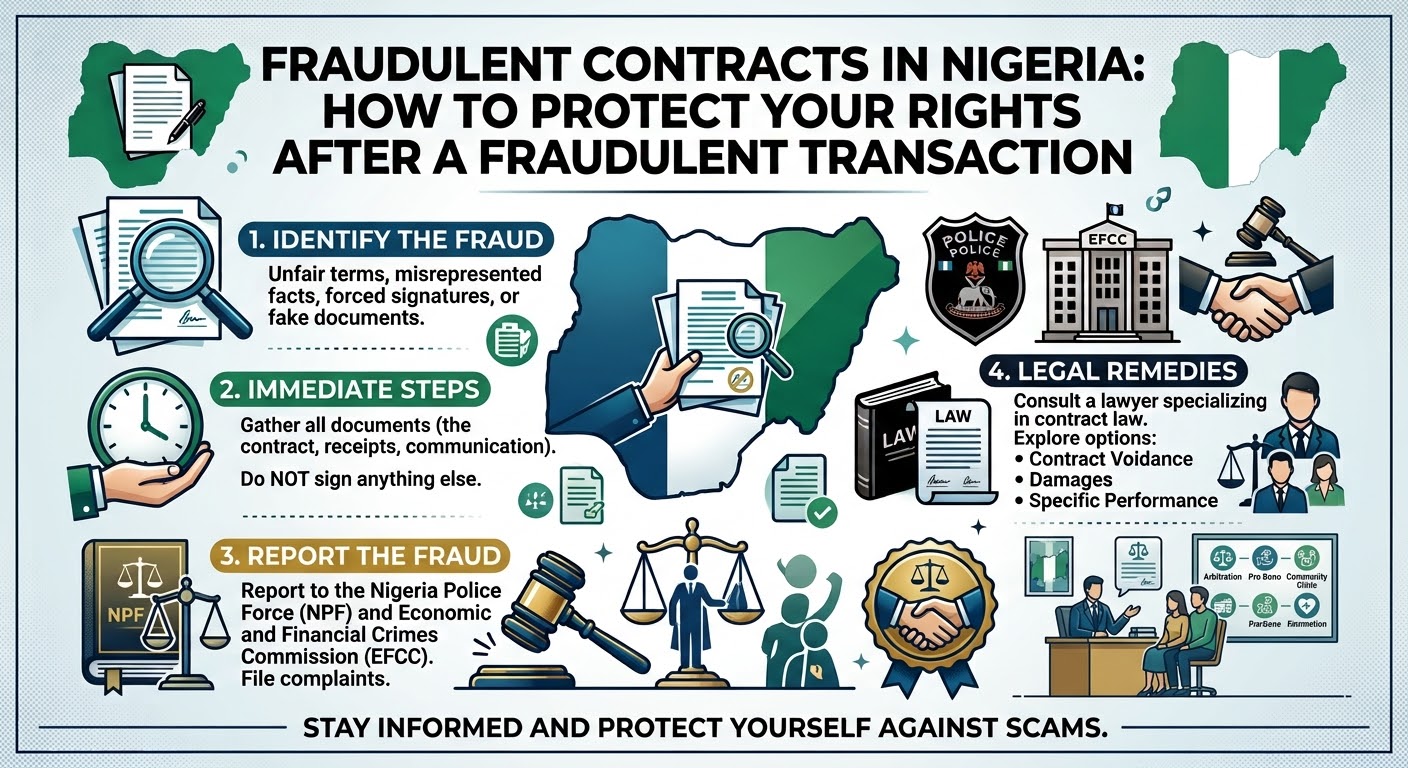
What Should You Do After Discovering Fraud?
If you discover that you were induced into a contract or transaction through fraud, consider taking the following steps promptly.
1. Preserve the Evidence
Keep all documents and information relating to the transaction.
This may include:
- Contracts and agreements;
- Receipts and payment records;
- Emails;
- WhatsApp or other messages;
- Letters and notices;
- Property documents;
- Bank records;
- Photographs;
- Audio or video evidence, where lawfully obtained; and
- Any other material that may establish what was represented to you and what actually occurred.
Do not destroy or alter potentially relevant evidence.
2. Obtain Legal Advice Promptly
Fraud cases can involve both substantive and procedural issues.
A lawyer can examine the transaction, identify the relevant legal issues and advise on the appropriate remedies and proceedings.
Depending on the circumstances, this may involve seeking orders to set aside the transaction, protect property or prevent further dealings with the subject matter of the dispute.
3. Consider Urgent Protective Measures
Where there is a risk that property or other assets may be transferred, sold or dissipated, urgent court intervention may be necessary.
In an appropriate case, an interim or interlocutory injunction may be considered to preserve the position while the dispute is being determined.
The precise remedy will depend on the facts and applicable procedural rules.
4. Do Not Assume a Police Report Automatically Cancels the Transaction
Fraud may have criminal as well as civil consequences.
However, reporting suspected fraudulent conduct to law-enforcement authorities does not necessarily, by itself, set aside a civil contract or reverse a property transaction.
Where your objective is to protect or recover a legal or proprietary right, you may also need to pursue the appropriate civil remedies through the courts.
The criminal and civil dimensions of a dispute should therefore not automatically be treated as substitutes for one another.
Can a Fraudulent Transaction Be Set Aside?
Where the law recognises a transaction as voidable because of fraud, the innocent party may have a right to seek appropriate relief.
The precise remedy will depend on the nature of the transaction and the facts of the case.
Possible remedies may include seeking orders to:
- Set aside the transaction;
- Restrain further dealings with the property or subject matter;
- Recover property or other assets;
- Obtain appropriate declarations;
- Claim damages or other monetary relief where legally available; or
- Obtain other appropriate relief from the court.
The important point is that the remedy must be properly pursued.
Why You Should Not Handle the Matter Casually
Fraudulent transactions can become increasingly difficult to unravel as more people become involved.
A fraudster may transfer property to another person, use documents to obtain financing, create additional interests or otherwise take steps that complicate the original transaction.
This does not mean that every subsequent transaction will defeat the victim’s rights. Rather, it demonstrates why prompt legal assessment is important.
The earlier the problem is identified and appropriate action considered, the better positioned the victim may be to prevent further complications.
Practical Takeaway
Fraud gives an innocent party grounds to challenge a transaction, but it does not necessarily erase the transaction automatically.
Where a contract is voidable because of fraud, it may continue to have legal effect until it is properly set aside.
That is why discovering fraud should trigger prompt action, not inaction.
Preserve your evidence. Obtain legal advice. Consider whether urgent court protection is necessary. And where appropriate, take steps to have the fraudulent transaction formally challenged and set aside.
The Key Lesson
Fraud may give you the right to reject and set aside a transaction—but you should not assume that the transaction has cancelled itself.
If you discover that a contract, property transfer or other transaction was procured through fraud, time may matter.
The sooner you take appropriate legal steps, the greater the opportunity to prevent the fraudulent transaction from creating additional rights or complications, particularly where innocent third parties may subsequently become involved.
When fraud is discovered, do not simply walk away. Protect your rights by taking the appropriate legal steps as soon as possible.
A publication of Edidiong Akpanuwa & Co.