
- October 26, 2026
- Edidiong Akpanuwa & Co
- 0
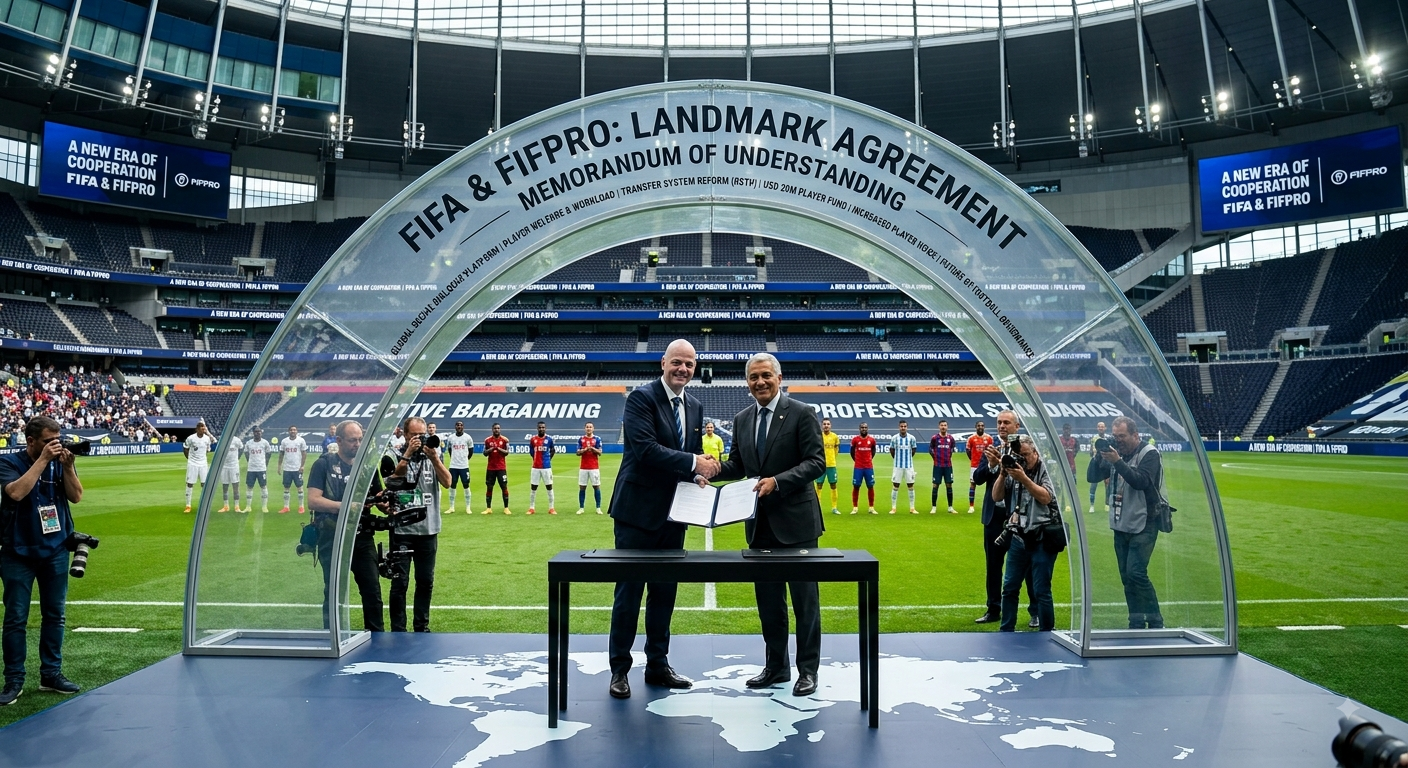
In a significant development for global football governance, FIFA and FIFPRO have signed a landmark Memorandum of Understanding (MoU) that is set to reshape the relationship between football’s governing bodies, clubs, leagues, and professional players.
The agreement, which runs until 31 December 2031, establishes a new framework for cooperation and formally recognises FIFPRO as the global representative body for professional football players. Perhaps most importantly, it introduces a Global Social Dialogue Platform through which key issues affecting professional football will be discussed and agreed collectively by stakeholders.
A New Approach to Football Governance
One of the most significant aspects of the agreement is that future amendments to FIFA’s Regulations on the Status and Transfer of Players (RSTP) will no longer be driven solely through regulatory processes. Instead, changes to the transfer system will be subject to collective discussions involving players, clubs, leagues, and football authorities.
This represents a major shift in football governance and reflects a growing emphasis on stakeholder participation in regulatory decision-making.
Greater Protection for Players
The agreement also places player welfare at the centre of football governance. FIFA and FIFPRO will collaborate on standards relating to player workload, rest periods, recovery time, occupational health, and overall welfare.
In addition, FIFA has committed USD 20 million to its Fund for Professional Players for the 2026–2029 period. The fund is designed to assist players who are unable to recover unpaid salaries from their clubs, providing an important safety net within the professional game.
Players Gain a Stronger Voice
Another notable development is the increased representation of players within FIFA’s decision-making structures.
FIFPRO-appointed representatives will participate in various FIFA committees, judicial bodies, and governance structures. For the first time, FIFPRO will also have observer status with speaking rights on player-related matters before the FIFA Council.
This development reflects a broader trend toward ensuring that those directly affected by football regulations have a greater role in shaping them.
Implications for Clubs and Football Administrators
For clubs, leagues, and football associations, the agreement signals a future in which employment relations, transfer regulations, standard player contracts, and dispute resolution mechanisms may increasingly be shaped through social dialogue and stakeholder engagement.
The agreement also highlights FIFA’s continued commitment to strengthening national dispute resolution chambers, collective bargaining arrangements, and professional standards across football jurisdictions worldwide.
What This Means for Football Stakeholders
Players, clubs, agents, leagues, and football administrators should closely monitor developments arising from this agreement. The framework is expected to influence future transfer regulations, player welfare obligations, employment standards, and dispute resolution systems throughout professional football.
Conclusion
The FIFA-FIFPRO agreement represents one of the most important governance developments in modern football. By promoting collaboration, strengthening player representation, and introducing a more structured approach to regulatory decision-making, the agreement may significantly influence how professional football is governed for years to come.
FIFA and FIFPRO’s Landmark Agreement: What It Means for Players, Clubs, Leagues, and the Future of Football Governance
In a significant development for global football governance, FIFA and FIFPRO have signed a landmark Memorandum of Understanding (MoU) that is set to reshape the relationship between football’s governing bodies, clubs, leagues, and professional players.
The agreement, which runs until 31 December 2031, establishes a new framework for cooperation and formally recognises FIFPRO as the global representative body for professional football players. Perhaps most importantly, it introduces a Global Social Dialogue Platform through which key issues affecting professional football will be discussed and agreed collectively by stakeholders.
A New Approach to Football Governance
One of the most significant aspects of the agreement is that future amendments to FIFA’s Regulations on the Status and Transfer of Players (RSTP) will no longer be driven solely through regulatory processes. Instead, changes to the transfer system will be subject to collective discussions involving players, clubs, leagues, and football authorities.
This represents a major shift in football governance and reflects a growing emphasis on stakeholder participation in regulatory decision-making.
Greater Protection for Players
The agreement also places player welfare at the centre of football governance. FIFA and FIFPRO will collaborate on standards relating to player workload, rest periods, recovery time, occupational health, and overall welfare.
In addition, FIFA has committed USD 20 million to its Fund for Professional Players for the 2026–2029 period. The fund is designed to assist players who are unable to recover unpaid salaries from their clubs, providing an important safety net within the professional game.
Players Gain a Stronger Voice
Another notable development is the increased representation of players within FIFA’s decision-making structures.
FIFPRO-appointed representatives will participate in various FIFA committees, judicial bodies, and governance structures. For the first time, FIFPRO will also have observer status with speaking rights on player-related matters before the FIFA Council.
This development reflects a broader trend toward ensuring that those directly affected by football regulations have a greater role in shaping them.
Implications for Clubs and Football Administrators
For clubs, leagues, and football associations, the agreement signals a future in which employment relations, transfer regulations, standard player contracts, and dispute resolution mechanisms may increasingly be shaped through social dialogue and stakeholder engagement.
The agreement also highlights FIFA’s continued commitment to strengthening national dispute resolution chambers, collective bargaining arrangements, and professional standards across football jurisdictions worldwide.
What This Means for Football Stakeholders
Players, clubs, agents, leagues, and football administrators should closely monitor developments arising from this agreement. The framework is expected to influence future transfer regulations, player welfare obligations, employment standards, and dispute resolution systems throughout professional football.
Conclusion
The FIFA-FIFPRO agreement represents one of the most important governance developments in modern football. By promoting collaboration, strengthening player representation, and introducing a more structured approach to regulatory decision-making, the agreement may significantly influence how professional football is governed for years to come.
A publication of Edidiong Akpanuwa & Co.