
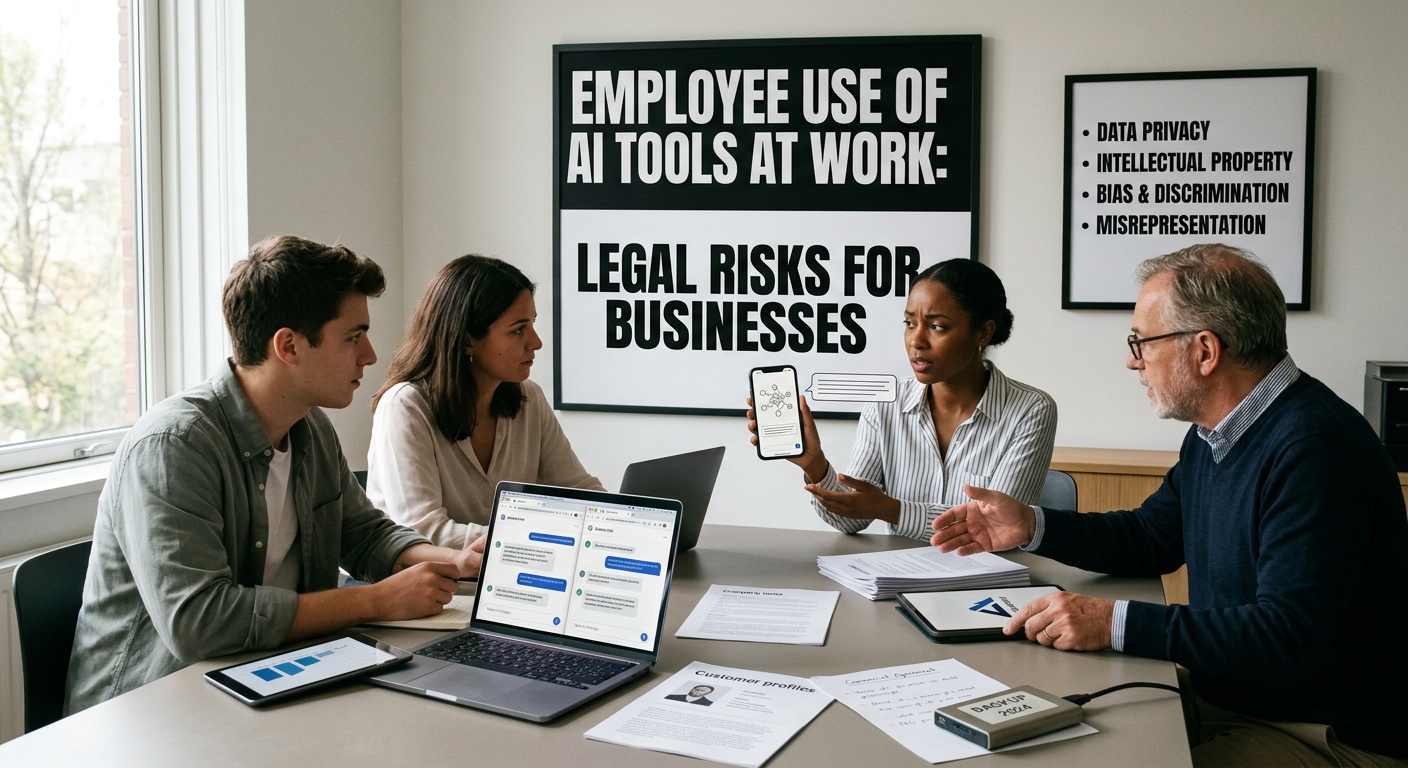
Artificial Intelligence (AI) is no longer a technology reserved for large multinational corporations. Today, employees across virtually every industry use AI tools to draft emails, prepare reports, analyse data, create presentations, write software code, summarise meetings, and even prepare legal documents.
For employers, these tools can significantly improve productivity.
However, they also introduce legal and commercial risks that many businesses fail to recognise until it is too late.
The question is no longer whether your employees are using AI. The real question is whether your business has established clear rules governing its use.
The Hidden Reality
Many employees already use AI platforms without informing their employers.
A finance officer may use AI to prepare financial reports.
A human resources manager may use AI to draft employment contracts.
A marketing executive may upload customer information into an AI platform to generate promotional content.
An in-house legal officer may ask AI to review a commercial agreement.
While these activities may appear harmless, they can expose a business to significant legal, regulatory, and reputational risks.
Risk One: Confidential Information
One of the greatest dangers is the disclosure of confidential information.
Employees sometimes paste contracts, customer records, internal reports, pricing structures, litigation documents, business strategies, or proprietary data into public AI platforms.
Depending on the platform and its terms of use, that information may be processed, retained, or used in ways the business did not intend.
Businesses owe duties of confidentiality to clients, customers, suppliers, and business partners. An employee’s careless use of AI could undermine those obligations.
Risk Two: Data Protection Compliance
Businesses handling personal data must exercise care when using AI tools.
Uploading customer names, contact details, employee records, financial information, or other personal data into AI systems without appropriate safeguards may expose organisations to regulatory scrutiny and liability.
Employers should understand how AI platforms process data before permitting employees to use them for business purposes.
Risk Three: Inaccurate Information
AI systems sometimes produce information that is inaccurate, incomplete, or entirely fabricated.
An employee who relies on AI without verification may unknowingly send incorrect legal advice, financial figures, technical information, or contractual provisions to clients.
Ultimately, responsibility rests with the business—not the AI platform.
Risk Four: Intellectual Property
Employees may assume that all AI-generated material belongs to the company.
In reality, ownership and licensing issues can be more complex depending on the AI platform used, the nature of the content generated, and applicable law.
Businesses should understand these issues before using AI-generated materials in products, marketing campaigns, software development, or client work.
Risk Five: Cybersecurity
Some AI tools require users to upload documents or connect with third-party applications.
Without proper controls, these practices may increase cybersecurity risks and expose valuable corporate information.
What Every Business Should Do
Businesses should not prohibit AI entirely.
Instead, they should manage its use responsibly.
Every organisation should consider adopting an internal AI Policy covering:
- Approved AI platforms.
- Prohibited uses.
- Confidentiality requirements.
- Data protection obligations.
- Human review before important decisions.
- Employee training.
- Record-keeping and accountability.
An AI Policy helps employees understand what is acceptable and reduces the likelihood of costly mistakes.
A Practical Example
Imagine a Nigerian manufacturing company preparing to negotiate a major supply agreement.
An employee uploads the draft agreement to a public AI platform for review.
The document contains pricing terms, production costs, customer details, and confidential commercial strategies.
Months later, the company discovers that sensitive information was shared without authorisation, exposing it to legal disputes and reputational damage.
The issue was not the use of AI itself—it was the absence of clear internal controls.
Looking Ahead
Artificial Intelligence will continue to transform the workplace. Businesses that embrace it responsibly will likely become more productive and competitive.
However, productivity should never come at the expense of legal compliance, confidentiality, or sound corporate governance.
Employers who establish clear AI policies today will be better positioned to manage legal risks, protect sensitive information, and build trust with customers, employees, and business partners.
Key Takeaways
AI is a powerful business tool, but it should be governed by clear internal rules. Every organisation should know:
- What AI tools employees may use.
- What information must never be uploaded.
- How AI-generated work should be reviewed.
- Who is accountable for AI-assisted decisions.
A publication of Edidiong Akpanuwa & Co.