
- October 23, 2026
- Edidiong Akpanuwa & Co
- 0
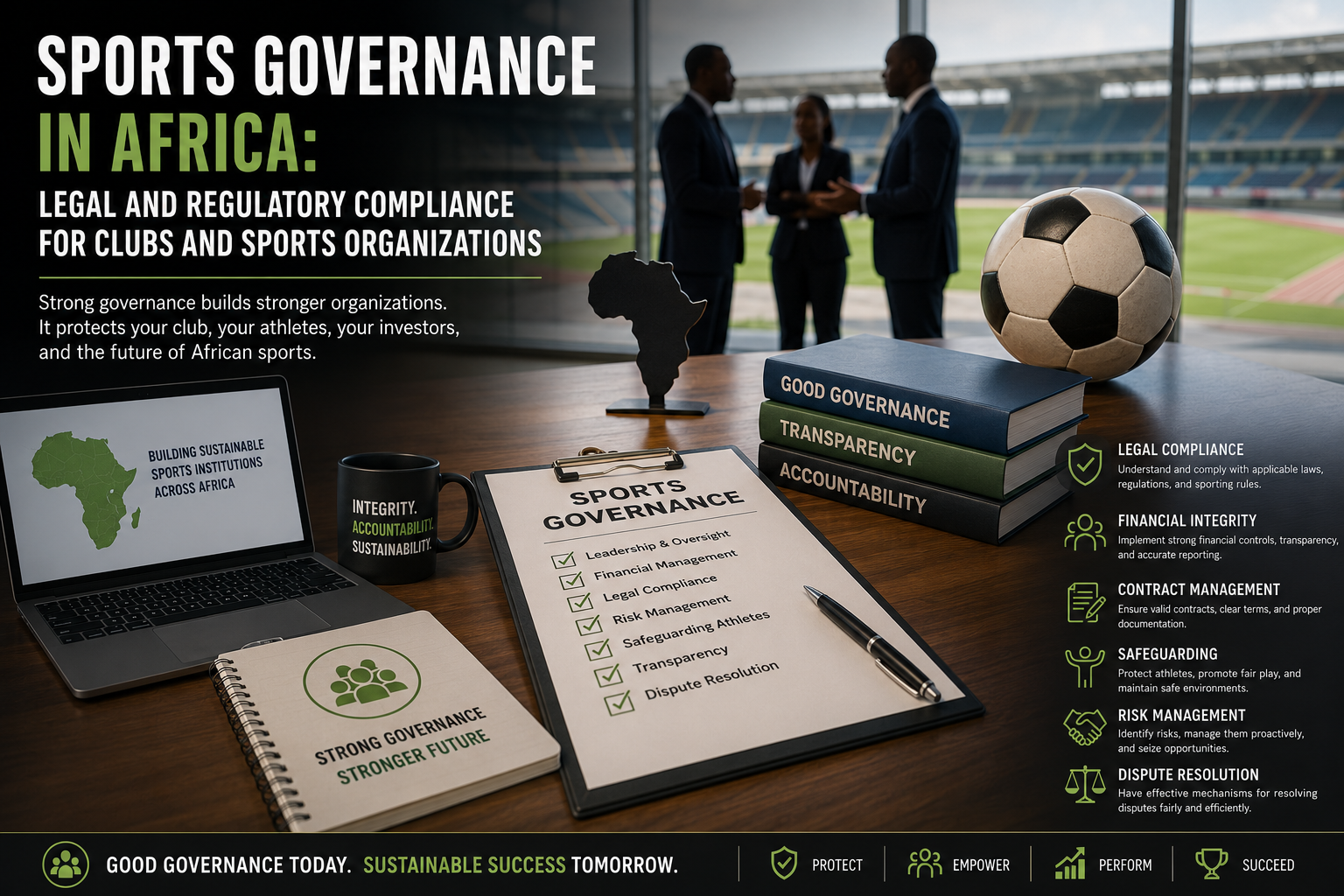
Sports Governance in Africa: Legal and Regulatory Compliance for Clubs and Sports Organizations
Sports governance is no longer simply an administrative concern. As African sports become increasingly commercialized and attract greater investment, clubs, federations, leagues, academies, and other sports organizations must navigate increasingly complex legal and regulatory requirements.
Governance failures can have serious consequences, including financial mismanagement, contractual disputes, regulatory sanctions, corruption allegations, safeguarding failures, and reputational damage.
Strong governance, by contrast, promotes accountability, transparency, effective risk management, and sustainable growth.
Why Sports Governance Matters
Sports organizations now interact with a wide range of stakeholders, including:
- Players and coaches;
- Sponsors and commercial partners;
- Investors;
- Regulators;
- Sports federations;
- Agents and intermediaries;
- Supporters and the wider public.
As the commercial value of sports increases, these stakeholders expect organizations to demonstrate responsible management and regulatory compliance.
Good governance can also improve an organization’s ability to attract investment, secure sponsorships, and build long-term commercial relationships.
Financial Governance and Accountability
Financial management is one of the most important areas of sports governance.
Clubs and other sports organizations may handle significant amounts of money through player transfers, salaries, sponsorships, broadcasting rights, ticket sales, grants, and commercial partnerships.
Weak financial controls can expose organizations to fraud, unauthorized expenditure, financial disputes, and regulatory problems.
Appropriate approval processes, financial reporting, record-keeping, and internal controls can help protect both the organization and its stakeholders.
Board Oversight and Decision-Making
Clear decision-making structures are essential.
Boards and senior executives should understand who has authority to approve contracts, expenditure, player transfers, sponsorship agreements, and other significant transactions.
Responsibilities should be clearly defined to reduce confusion and prevent important decisions from being made without appropriate oversight.
Board involvement should provide strategic direction without unnecessarily interfering with day-to-day management.
Managing Conflicts of Interest
Conflicts of interest can create significant governance risks.
A conflict may arise where a director, executive, shareholder, agent, or other decision-maker has a personal or financial interest in a transaction involving the organization.
Sports organizations should have procedures for identifying, disclosing, and managing potential conflicts.
Transparency in these situations can help protect the organization from allegations of improper conduct.
Player Contracts and Transfer Compliance
For football clubs, governance extends directly into player recruitment and transfers.
Clubs must consider contractual stability, registration requirements, transfer windows, training compensation, solidarity contributions, intermediary arrangements, and applicable FIFA and national regulations.
Poorly managed transfers can result in financial liabilities, disputes, registration problems, and disciplinary consequences.
Proper legal due diligence should therefore form part of every significant transfer.
Safeguarding and Athlete Protection
Sports organizations also have responsibilities to protect athletes, particularly young and vulnerable players.
Appropriate safeguarding policies should address issues such as abuse, harassment, discrimination, bullying, exploitation, and reporting procedures.
Sports academies should pay particular attention because they often work directly with minors.
Safeguarding is therefore both a legal responsibility and an important component of institutional credibility.
Data Protection and Digital Governance
Sports organizations increasingly collect substantial amounts of personal and commercial information, including player records, employee information, performance data, financial records, and supporter information.
Organizations should implement appropriate data-governance and security measures and comply with applicable data-protection requirements.
Poor information management can create legal, regulatory, and reputational risks.
Dispute Resolution
Disputes may arise between clubs and players, coaches, agents, sponsors, shareholders, federations, or other commercial partners.
Organizations should consider dispute-resolution mechanisms when negotiating contracts.
Depending on the circumstances, negotiation, mediation, arbitration, or litigation may be appropriate.
A carefully drafted dispute-resolution clause can help reduce uncertainty when disagreements arise.
The Risks of Poor Governance
Weak governance can expose sports organizations to:
- Financial losses;
- Regulatory sanctions;
- Contractual disputes;
- Reputational damage;
- Investor concerns;
- Sponsor withdrawals;
- Operational disruption;
- Safeguarding failures.
These risks can be particularly damaging for organizations seeking international investment or commercial partnerships.
Building a Strong Governance Framework
Sports organizations should consider establishing:
- Clear board and management responsibilities;
- Financial controls and reporting procedures;
- Conflict-of-interest policies;
- Contract-management systems;
- Regulatory compliance procedures;
- Safeguarding policies;
- Data-protection measures;
- Whistleblowing mechanisms;
- Dispute-resolution procedures;
- Regular legal and regulatory reviews.
The appropriate framework will depend on the organization’s size, structure, sport, and activities.
What This Means for African Sports Organizations
As African sports continue to commercialize, governance will increasingly become a competitive differentiator.
Clubs, federations, academies, and sports enterprises that demonstrate strong governance can improve stakeholder confidence, reduce legal risk, attract investment, and create more sustainable institutions.
Sports governance should therefore be viewed not merely as a regulatory obligation, but as a strategic asset.
Conclusion
The future success of African sports will depend on more than sporting performance.
Organizations must also develop the legal, financial, and governance structures necessary to manage increasingly complex commercial and regulatory environments.
Good governance protects the organization, its athletes, its investors, and its reputation, and creates the foundation for sustainable growth.
A publication of Edidiong Akpanuwa & Co.